
Japanese knives
Japanese kitchen knives are significantly different from classic European knives in shape, construction, and especially cutting properties. Japanese knives combine extreme sharpness, excellent cutting properties, precision, unique design, and cultural heritage, which brings chefs from all over the world to the kitchen counters. Japanese-style knives are made of harder steel compared to European knives, thanks to which allows the blade stay sharp longer. On the other hand, they need much gentler handling and require more care.
The most common type of Japanese knife is the santoku, which is a classic type of universal knife for versatile use. However, you can also increasingly come across other types of Japanese knives, such as gyuto (chef's knives), deba (filleting knives), nakiri (vegetable cleavers), petty (vegetable and fruit knives), sujihiki (slicing knives), usuba (vegetable knives), yanagiba (filleting knives), or kiritsuke (universal knives).
At Kniland, you will find high-quality Japanese kitchen knives from Japanese manufacturers KAI, Tojiro, Kanetsune Seki, Satake, Seki Kanetsugu, as well as Japanese-style knives from many world manufacturers such as Samura, Dellinger, Böker, Opinel and Victorinox.






Product sorting
List of products


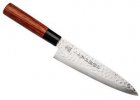
Japanese utility knife KAI Shun Nagare with damascus steel blade and grey-black pakka wood handle. Blade length is 15 cm.


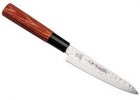
Japanese paring knife KAI Shun Nagare with damascus steel blade and grey-black pakka wood handle. Blade length is 9 cm.


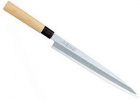
Japanese carving knife KAI Shun Nagare with damascus steel blade and grey-black pakka wood handle. Blade length is 23 cm.

Japanese bread knife KAI Shun Nagare with damascus steel blade and grey-black pakka wood handle. Blade length is 23 cm.

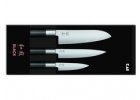
Exclusive edition of Japanese knives contains 2 knives (chef's, universal) from KAI Shun Kohen series in limited number of 3000 pieces.


Listing controls
Why choose a Japanese kitchen knife?
Sharpness: Japanese knives are known for their exceptional sharpness and precise cuts. They are often made of high-quality steel, which allows for incredibly fine cuts. Slicing will not only be smoother, but also more efficient.
Precision: Japanese knives are focused on achieving precise cuts, which is key to many culinary techniques.
Blade hardness: For many Japanese knives, their harder blade is key, which reduces the frequency of sharpening the knives. You will especially appreciate this feature when using knives every day. Compared to European knives, Japanese knives usually have thinner and lighter blades.
Variety of choice: choosing from a wide range of specialized types of Japanese knives will not be a problem. Each knife is designed for specific tasks, for example, the Japanese type Gyuto can be used for universal tasks in the kitchen, the popular Deba for filleting fish and Usuba for chopping vegetables.
Aesthetic design: Most Japanese knives are not only functional, but also aesthetically pleasing. You can choose from elegant, minimalist, or luxurious designs.
Balanced weight distribution: Japanese knives emphasize balance and a comfortable grip throughout the entire period of use, which contributes to easier handling and reduced fatigue during prolonged use. They are designed with a focus on balance and provide a comfortable feel in the hand. This balance contributes to ease of use and reduces fatigue during prolonged use.
Cultural heritage: Japan is a country that takes its culinary heritage extremely seriously, and the knife industry is no exception. The combination of tradition, craftsmanship, and modern innovation makes knives a jewel among sharp tools. Manufacturing techniques are often passed down from generation to generation.