
Sharpening
For everyone who uses knives - whether in the kitchen, hunting, or mushroom hunting - a sharp edge is essential for effective and safe use. No matter how high-quality the knife is, it will eventually lose its effectiveness without regular sharpening. That's why electric knife sharpeners, sharpening stones, honing steels, or entire sharpening systems are an inseparable part of every knife user's equipment.
You can find a wide selection of tools and accessories for knife sharpening - stones for sharpening systems or compounds. With them, you can keep your blade in perfect condition regardless of the type of knife you own.
#ShowMore#
Why It's Important to Sharpen Knives Regularly
Sharpening knives shouldn't be seen as a forced chore but as a natural part of caring for a quality tool. Regular sharpening extends a knife's lifespan, maintains its performance, and ultimately contributes to a better experience while working or cooking. A sharp knife handles various types of ingredients and materials more effectively, which also saves the user's energy.
Knives as the Foundation of Effective and Safe Cutting
A sharp knife isn't just about comfort—it's also a matter of safety. A dull knife requires more force to cut, which increases the risk of the blade slipping and causing injury. On the other hand, sharp knives cut into ingredients easily, allowing for precise, smooth, and safe cutting.
In the kitchen, while hunting, or in the workshop, a sharp knife is irreplaceable. It reduces hand fatigue, increases the speed of your work, and at the same time, maintains the quality of the material being processed—from tender meat to hard wood or leather.
Risks Associated with Using Dull Knives
Using a dull knife not only leads to ineffective work but also to potential accidents and damage to the tool itself. When you press on a knife with greater force, you not only increase the risk of injury but also the wear and tear on the blade, or its possible bending or cracking.
In the long term, neglecting to sharpen your knives leads to the need for more frequent replacements, which is both financially inefficient and ecologically unsustainable.
A Sharp Knife Saves Both Time and Nerves
A sharp knife allows for quick and precise cuts without effort. In the kitchen, you'll be able to prepare ingredients much faster, saving energy during production and being able to rely on your knife as a functional tool while hunting or working in the field.
A sharp knife saves your nerves, especially when you need to work quickly and precisely—without snagging, tearing, or unnecessary effort. It's a tool that, with proper care, always performs at its best.
Types of Knife Sharpening Tools
Knives can be sharpened in various ways—from traditional to modern. The choice of the right tool depends on the type of knife, how often you use it, and your personal preferences. Today's market offers both manual and electric options, from simple honing steels to professional sharpening kits with adjustable angles.
Each of these tools has its own advantages and is suitable for a different work style. Home users will appreciate simpler options, while enthusiasts and professionals usually go for more precise systems.
Basic Types of Sharpeners:

How to Choose the Right Sharpening Angle
Choosing the right sharpening angle is one of the most important steps in knife care. The angle at which you sharpen the blade affects the knife's sharpness, durability, and overall performance. A very low angle provides extreme sharpness but will be prone to damage. Conversely, a higher angle offers greater durability but a less aggressive cut.
For everyday use, it's important to find a balance between sharpness and edge retention. Some sharpening systems offer a fixed or adjustable angle, which significantly simplifies the entire sharpening process.
Recommended Angles by Knife Type
Different sharpening angles are recommended for various types of knives:
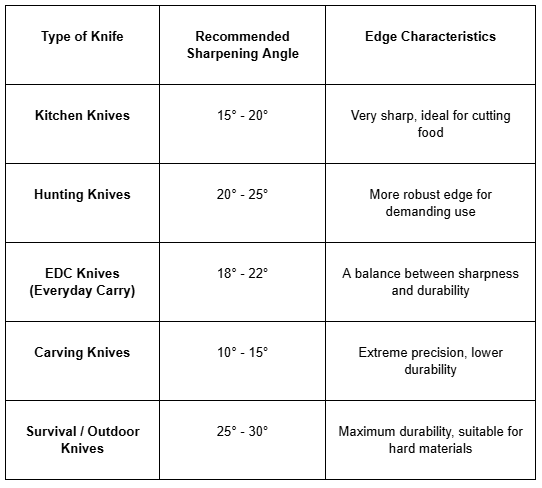
📌 Tip: If you're unsure what angle to use, check the original edge angle specified by the manufacturer, or start conservatively with an angle of around 20°, which is universal for most knives.
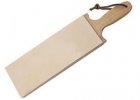
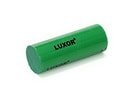

Product sorting
List of products


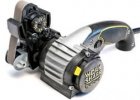
Hand-held ceramic sharpener designed especially for kitchen knives yanagiba, serrated knives or scissors. Six sharpening grades and three grit levels (320, 360, 1000 grit). Just...

The handheld diamond sharpener includes 8 versatile features for professional sharpening in the field and for surviving in outdoor conditions. Three grit levels (360, 600, 1000...

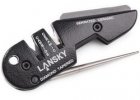
Pocket sharpener for quick knife sharpening in the field. Includes two diamond plates with 360 and 600 grit for coarse and medium sharpening, ceramic sharpening rod 1000 grit...

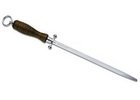
Sharpi ceramic sharpening rod, round shape, 1000 grit. Ideal for regular blade maintenance or fine sharpening after using a coarse stone. Plastic handle, hanging loop. Overall...


Hand-held diamond sharpener for kitchen knives. The medium and fine sharpening grade (grit 600/1000) is suitable for all knives with a hardness up to 65 HRC. The ergonomic...


Hand-held diamond sharpener for kitchen knives. The coarse sharpening grade (grit 360) is suitable for all knives with hardness up to 65 HRC. Simply pull the knife through the...

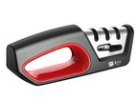
Hand-held diamond sharpener with 4 functions and auxiliary guide rails. Grit 320/600. Use of high quality materials such as diamond, ceramic or tungsten carbide.

Sharpi diamond sharpening steel, round shape with 600 grit. Ideal for sharpening dull knives, including those made of hard steel. Durable plastic handle with a hanging loop....

Sharpi diamond sharpening steel, round shape with 600 grit. Ideal for sharpening dull knives, including those made of hard steel. Durable plastic handle with a hanging loop....

Combined diamond sharpening stone that includes 360 and 600 grit stones and a plastic stone holder. Ideal for sharpening knives made of hard steel.The size of the stone is 20 x...

Combined diamond sharpening stone that includes 360 and 600 grit stones and a plastic stone holder. Ideal for sharpening knives made of hard steel.The size of the stone is 20 x...


Small portable sharpener for quick knife sharpening in the field. Medium and fine sharpening grade (grit 400/1000). Dimensions of the sharpener are 100 x 30 x 5,5mm and weight...
Frequently Asked Questions (FAQ)
How often should I sharpen my knives?
The frequency of sharpening depends on the method and intensity of use. Professional kitchen knives are often sharpened as often as once a week, while a typical home knife is fine with sharpening once every 3 to 4 weeks. In the meantime, it's recommended to regularly use a honing steel to straighten the edge.
Can I sharpen a ceramic knife at home?
No. Ceramic knives are very hard but also brittle and sensitive to pressure. They require special diamond tools and precise technique for sharpening. Sharpening ceramic blades at home can lead to cracking or irreversible damage.
What's the difference between sharpening and honing?
- Sharpening — removes a portion of the material to create a new edge.
- Honing (e.g., with a honing steel) — only straightens an existing edge without removing material.
These two activities complement each other: honing maintains sharpness for longer, while sharpening restores the edge when honing is no longer enough.
Is an electric sharpener safe for expensive knives?
Yes, but only with proper use. An electric sharpener can quickly sharpen a knife, but a poorly set angle or too much pressure can destroy the blade. For high-quality knives, models with multi-stage sharpening and the option to adjust the angle are recommended.
What's the ideal sharpening angle for a kitchen knife?
An angle of 15° to 20° is most commonly recommended. Japanese knives are thinner and sharpened to a lower, sharper angle (around 15°), while European kitchen knives are typically sharpened to around 20°. It's important to maintain the manufacturer's original angle if it's known.
What do the numbers on sharpening stones mean?
A higher number equals a finer surface, resulting in a smoother and more precise edge. These numbers indicate the grit of the sharpening stone:
- Coarse Stones (0 - 399 grit) — suitable for repairing a damaged or completely dull edge.
- Medium Stones (400 - 999 grit) — ideal for the initial sharpening of a dull edge.
- Fine Stones (1000 - 2999 grit) — used for regular sharpening and restoring a slightly dull edge.
- Extra Fine Stones (3000 - 5999 grit) — ideal for smoothing the edge.
- Ultra Fine Stones (6000+ grit) — for the final polishing of the edge to a mirror shine.
Can I sharpen a knife without tools?
Yes, but only temporarily and in an emergency. You can use, for example:
- The unglazed bottom of a ceramic cup or plate
- A leather belt with paste
These methods can help for a little while, but they are not a substitute for quality sharpening tools.
When is it a good idea to leave sharpening to a professional?
If you have:
- A very expensive or specially shaped knife.
- A damaged or serrated edge.
- Or you are not sure about the correct procedure.
Professional sharpening ensures a precise angle and maximum sharpness without the risk of damage.
How to tell if a knife is sharp enough?
A sharp knife cuts smoothly and effortlessly—it shouldn't tear or splinter the material.
- The paper test—the knife cuts through it without tearing.
- The tomato test—it cuts through the skin without pressure.
- The touch test on your thumbnail—the edge shouldn't slip but "catch".
Does the sharpening method affect a knife's lifespan?
Yes. Improper sharpening—for example, with the wrong angle, too much pressure, or a low-quality tool—can cause wear and tear or permanent damage to the blade.